
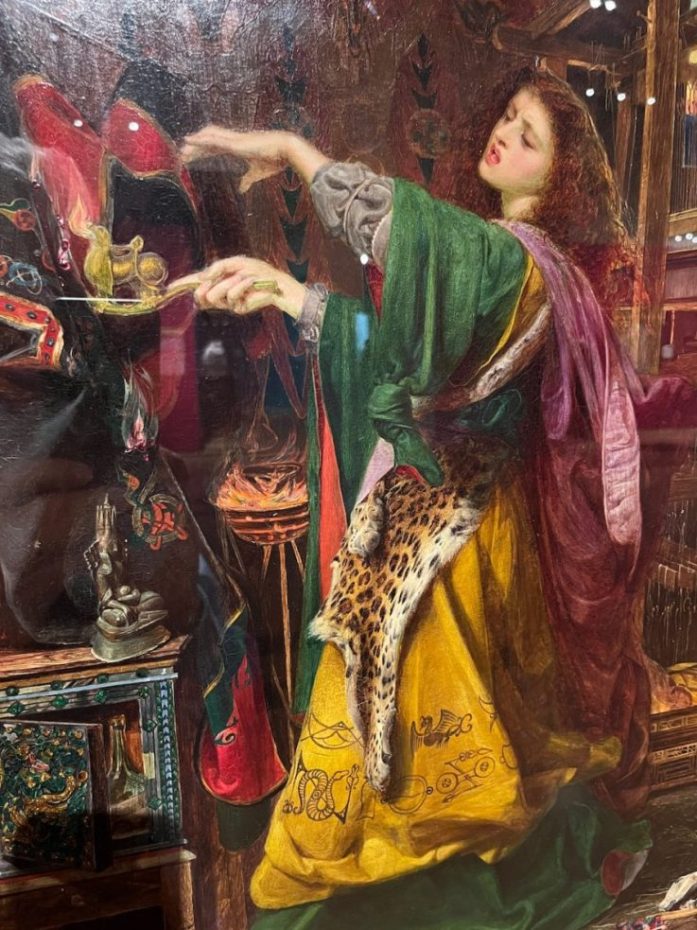
Today, Pre-Raphaelite art is enjoying a moment. Once banished by the anti-decorative doctrines of Modernism and, later, by feminist scholars who decried the ornamental depiction of women, Pre-Raphaelite art is now being reassessed and the models that graced the paintings of artists like William Holman-Hunt, Dante Gabriel Rossetti and Edward Burne-Jones, are celebrated in their own right. In fact, these same, once-pitied women are now recognized as pioneers, defying Victorian notions of beauty and behaviour, setting fashion trends, forging celebrity, taking performative art to a new level and, most importantly, becoming accomplished painters and poets in their own right. As Angelica Frey characterizes them in Art & Object: Pre-Raphaelite models transformed their own lives through active engagement in art. They became … the de facto figureheads of a movement.
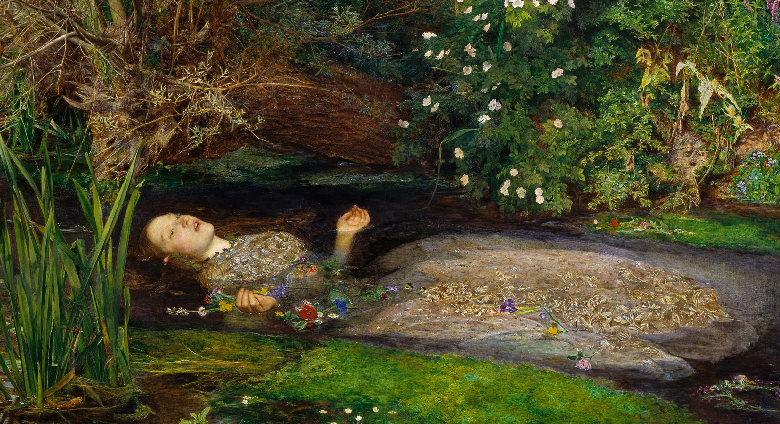
Who can forget model Elizabeth Siddal’s tragic portrayal of the drowning Ophelia, painted by John Everett Millais? She famously posed in a tub of water for many days, eventually contracting pneumonia. However, far from being a pliant victim, her resilience made her a performance artist extraordinaire and, later, a poet, Encouraged by her patron, John Ruskin, and fellow artist, Rossetti, she also turned her considerable talents to drawing and painting, all with success.
Or consider Jane Morris, who appeared in countless Pre-Raphaelite works including Rossetti’s celebrated La Pia de Tolomei. Already a gifted needlework artist, self-taught in ancient embroidery techniques, she later became famous for her William Morris embroideries.
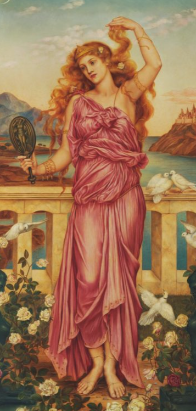
And then, there was Evelyn De Morgan, an accomplished artist by any standard, influenced by the Pre-Raphaelites but developing her own unique vision, combining Pre-Raphaelite style with Aesthetic and Symbolist art, to express spiritualist ideals.
What links these artists and, indeed, all Pre-Raphaelite work is an obsession with dreams: ‘that delicate mental balance between reality and illusion’ according to curator Rowland Eliza, author of The English Dreamers. The art reflects the preoccupations of a pre-Freudian, Victorian society, drawing from both reality and illusion to create hyper-clarity in technique and a rich colour palette to express themes of innocence, fantasy, myth and legend.
My novel, A Painting to Die For, plays with some of these tableaus, describing dream-like settings, a character possessing Pre-Raphaelite beauty haunted by sleep paralysis and nightmares while another tries to reclaim her lost past through fantasy and delusion. Meanwhile, a Francis Bacon forgery, a painting of brutal and unsparing ugliness, comes to symbolize the fine line between beauty and repulsion.
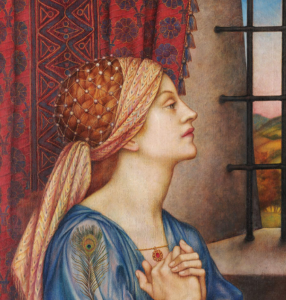
Like De Morgan’s The Prisoner, depicting a woman trapped behind bars, yearning for death to escape into the transcendent light of immortality, A Painting to Die For can be read as allegory. At one point, a principal character dons a designer’s ostrich feathered dress: the ostrich feather representing immortality. In another scene a hotel lounge ‘shimmers like sunlight on a still pond, the scent of white roses and Debussy drift in the air.’ Elsewhere, a riverbank ‘glimmers in the orangey-blue radiance of dawn, as mist dissolves in the crisp morning air.’ Pivoting between art’s debasement and settings of otherworldly beauty, this unsettling yin and yang challenges the reader to decide not only what is real versus fake, but also to decide at what point beauty turns ugly. As one of the principal characters, who quotes John Donne, prophetically observes: ‘Love built on beauty, soon as beauty, dies’.
