Music is a moral law. It gives soul to the universe, wings to the mind,
flight to the imagination, and charm and gaiety to life and to everything.
Plato
I grew up loving music. In the days before online distraction, I spent many blissful hours just listening, soaking up the emotions and ideas music conveyed. Later on, as a filmmaker, music played an important role in the programs I produced, providing their emotive foundation. One of my greatest pleasures was sitting in on the mix, as the score brought the scenes alive, conveying mood, atmosphere and expressive context. Often, it felt like I was experiencing the film in a brand new way.
When I turned to writing, music continued to be a central influence.
Whenever I sit down to write, I play music. But I don’t use it as sonic wallpaper or muzak. Instead, my choices reflect the kind of story I’m trying to tell. The selections must convey the story’s mood and atmosphere and reveal the emotional state of my characters. If the chapter requires romance, I might pick something with strings or turn to a samba beat. If it’s dramatic, I turn to compositions with strong, percussive elements. A scene set in a nightclub might require a techno beat to set the mood. Should the moment require deliberation or reflection, I often use Bach; for pure emotion, Mahler or Vaughan Williams. Maybe I come to a chapter that evokes nostalgia for a specific time or place. Then, I draw from the history of pop music. There, the choices are nearly infinite. The point is that music gets me writing. It is only when I am doing a final technical edit that I seek silence.
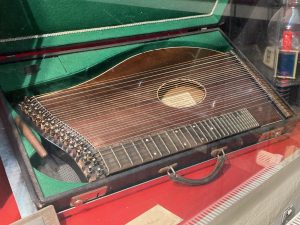 Given my background, I draw musical inspiration as much or more from cinema as literature. Consider how central the zither is to The Third Man; “Also Sprach Zarathustra” to 2001: A Space Odessey; “Midnight, the Stars and You” to The Shining; or “Flight of the Valkyries” to Apocalypse Now. Each leaves an imprint, an indelible, thematic impression about what the story is really about.
In my novel, A Painting to Die For, music is referenced constantly. Thematically, each of my characters is dealing with the past. One is trying to make sense of it. Another wants to escape it; still another finds comfort in its nostalgic haze. With this in mind, I made the decision to go retro. It might be the stylings of a lone pianist at a posh brunch, a piece by Debussy drifting like the scent of white roses through afternoon tea, a Walkman playing Michael Jackson, a rendition of “Autumn Leaves” in a cocktail lounge, or the lush sounds of “Blue Moon,” as my characters Aiden and Margaret slow-dance their way to bed. https://www.youtube.com/watch?
Each allusion is intentional, designed to set the mood, illuminate the characters and reveal the theme.
As Martin Luther once said:
“I was born with music inside me. Music was one of my parts. Like my ribs, my kidneys, my liver, my heart. Like my blood. It was a force already within me when I arrived on the scene. It was a necessity for me—like food or water.”