

While it is impossible to say exactly how many fakes are circulating in the contemporary art market or hanging in major galleries and art institutions, guesstimates range anywhere from single digit percentages to as high as fifty percent. Whatever the truth, all experts agree on one thing: the number of misattributions and out-and-out fakes is significant.
The art market has always been rife with copies posing as the genuine article. Indeed, many of the world’s most famous artists operated studios that employed dozens of trainees and students eager to learn from and copy the master. Apprentices were essential to keeping up with the steady steam of commissions. Typically, in the case of a portrait, the master might design the overall composition, then paint in the face, leaving interns to fill in the rest. Many of these trainees became successful artists in their own right.
Over time, some of the history of these collaborative efforts became blurred. Some were solely attributed to the artist, others were credited to the studio, while others were dismissed as fakes or copies. Gradually, the provenance of these works was lost due during wars and/or the breakup of estates. New generations of students, as well as professional art forgers, created more copies or invented new ones. Later still, the looting of art by the Nazis opened up new opportunities for forgers to ‘rediscover’ works that had been lost or destroyed in bombing raids. As the value of fine art increased exponentially during the late 20th and early 21st century, the list of professional forgers mushroomed. Fakery became a fine art of its own. Many forgers have become masters of faking provenance too, altering records, recycling period-correct canvases and frames, and artificially aging new labels.
Many countries are woefully under-resourced to tackle the problem. For example, Great Britain has only a handful of trained officers, as austerity and other priorities continue to hamper enforcement initiatives. Establishing authenticity and tracing provenance is time-consuming and costly. While science can help determine whether a work was painted centuries ago or only last week through spectrometry, X-ray, microscopy and other forms of sophisticated analysis, these processes are costly, requiring highly specialised equipment and staff. Adding to the problem, galleries are reluctant to admit they’ve been fooled and high-end clients turn to insurance remediation, rather than risk seeing their expensive investment outed as a worthless fake.
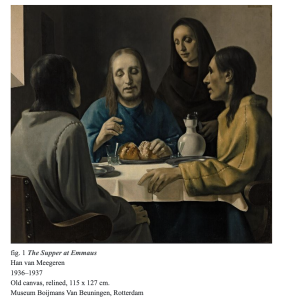 Forgers have become part of modern-day folklore. Some of the world’s most famous include Han van Meegeren (specializing in Vermeer), Wolfgang Beltracchi (painting over a thousand works including ones by Ernst and Leger) and Elmyr de Hory (perhaps the most prolific, faking thousands of works including many by Matisse and Picasso).
Penalties for art fraud vary widely, depending on the jurisdiction and the severity of the crime. In the US, Canada and Britain financial penalties can be unlimited and jail time up to ten years. Many of the best-known forgers served time but capitalized on their fame through books and artwork upon their release.
Books and documentaries abound on these colourful, often unrepentant characters, and make for fascinating reading and viewing. Many of their stories can be readily found on YouTube and their written accounts are seldom out of print.
