
It’s hard to believe a year has passed since A Painting to Die For was officially launched. Since then, the book has received enthusiastic reviews, been nominated by the Crime Writers of Canada for best debut crime fiction and will soon be released in hardcover form with a new focus on bricks and mortar stores. I have also begun work on a sequel and another potential novel.
Creative work is struggle: a struggle to express, to master a medium, to find an audience and to convey a compelling vision. Bill’s struggles in A Painting to Die For become a metaphor of this aesthetic battle.
While A Painting to Die For concentrates on criminality in the high-stakes international art market, I always wanted the book to serve as a meditation on art in the 21st century. Specifically: what does it mean to be an artist in the internet age, where fine art has lost its power to shock and, increasingly, serves narrowing commercial interests. This issue is something Bill, the protagonist, struggles with as his own ethics are challenged and his veneration for art severely tested. Despite grappling with grifters, murderers, police and his own dysfunctional family, Bill’s obsession with art remains front and centre. Even his looking in a bathroom mirror becomes an opportunity for aesthetic reflection:
The artist in me longed to scrape away this dry patina to reveal the preliminary sketches, alive with youthful promise.
Later, as his world crumbles and his values are shaken to their core, he mulls:
Was art-making just another lie—a means to pretty things up, diffuse the anger, make the pain tolerable? Would it make any difference, now that ‘shock of the new’ is long over? Was truth nothing more than the journey we all take, the one that always ends in the same artless answer?
A Painting to Die For is set in 2017, before the ‘democratization’ of art through ChatGPT and other AI platforms. What would Bill make of this new technology that allows someone with no artistic ability whatsoever to create professional-looking art within seconds? Would he see it as a threat, rendering artists obsolete, or would he see it as a new tool, in the way McLuhan saw new technologies extending the hand of man? Something lost and something gained.
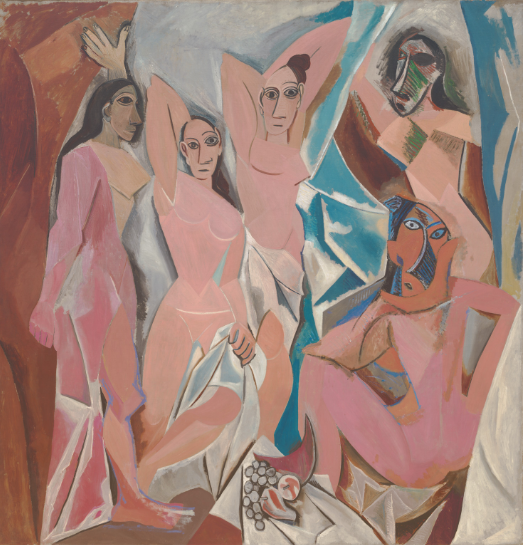
Some art historians question whether the African masks Picasso employed to upend European painting tradition are any different or better than their original source material. Provocatively, could AI achieve a similar, revolutionary outcome, employing mountains of generated data? And, if it can, what role will be left for human creativity?
Like mankind’s struggles to create beauty in the face of nature’s grace, will AI become a bridge to future ethereal visions or put the nail to human creative potential? Perhaps Bill has unknowingly answered the question as he comes to recognize his own creative limits:
I also had considered painting her portrait, but I abandoned the idea. It would only end up a pale copy of the original. I’d learned how sad it is to fall in love with a myth, never to see the real person until it’s too late. As Margaret had quoted: ‘Love built on beauty, soon as beauty, dies.’
